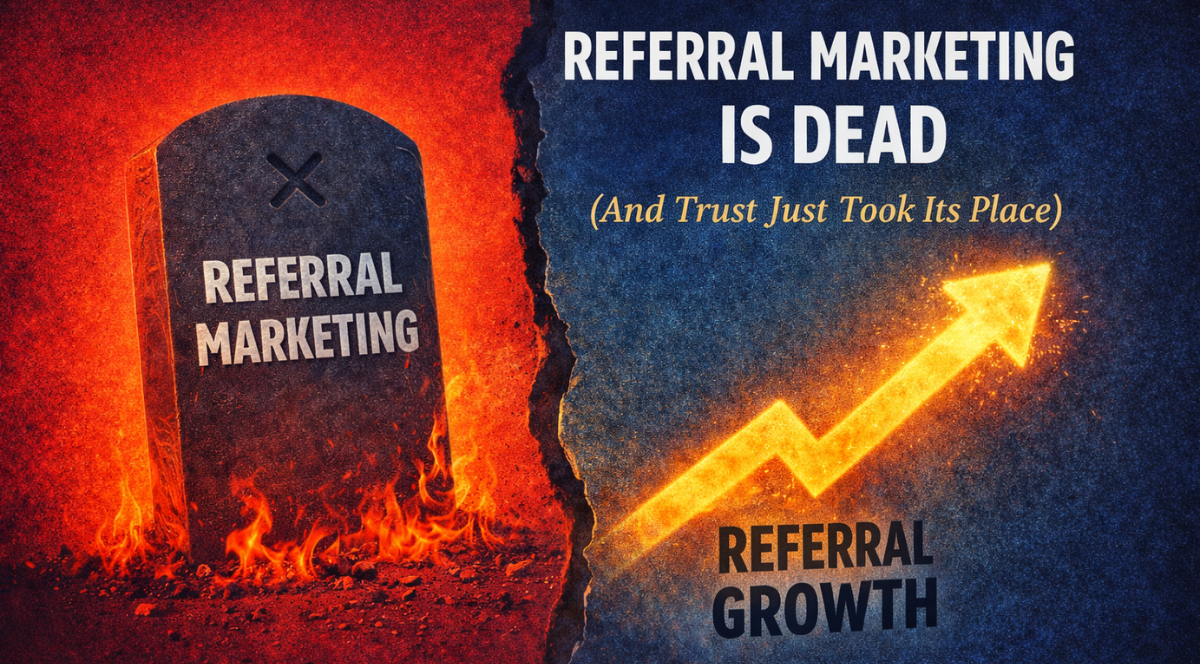
Why referral marketing is dead
Most businesses are still trying to “do referral marketing.” They launch campaigns, introduce incentives, refine scripts, and rehearse awkward asks in the hope that more referrals will follow.
But here is the uncomfortable truth.
Referral marketing was never the thing. Trust was.
Trust does not respond to tactics. It responds to behaviour. And when behaviour does not match expectation, no amount of incentives or reminders will compensate.
That is why referral marketing is dead. And referral growth is rising.
Key Takeaways
- Referral marketing extracts; referral growth elevates
- Trust drives referrals, not incentives or scripts
- Referrals are a trust outcome, not a tactic
- Making the referrer the hero changes everything
- Experience and response speed shape advocacy
- Becoming highly referable is a long-term strategy

What changed in professional services?
For years, businesses treated referrals as if they were just another marketing channel. The thinking was simple: create a campaign, offer a reward, remind clients often enough, and referrals will increase.
“Let’s launch a referral campaign.”
“Let’s offer £100 for introductions.”
“Let’s remind clients to refer.”
The intention was logical. The framing was flawed.
Referrals were never a marketing activity. They were always a trust outcome.
Marketing influences activity. Trust influences referrals.
That distinction may seem small, but it changes everything.
The Old Model: Referral Marketing
Referral marketing focuses on incentives, scripts, follow-ups, reminders, and promotions. It centres on one core question:
“How do we get people to refer?”
But that question starts from extraction. And when people feel extracted from, resistance appears.
Clients do not want to feel processed. They do not want to feel like a lead source inside someone else’s funnel. They do not want to feel nudged into helping.
They want to feel proud.
The moment referrals feel transactional, they lose their power.
The New Model: Referral Growth
Referral growth begins with a different question:
“What would make someone want to talk about us?”
That shift reframes everything.
Instead of focusing on incentives, it focuses on experience. Instead of reminders, it focuses on response speed. Instead of scripts, it focuses on reputation signals and emotional impact.
Most importantly, it focuses on making the referrer the hero.
Referral growth is not about extracting introductions. It is about creating moments worth sharing.

The Referral Edge explained
A Referral Edge is the advantage you earn when three conditions are present.
Clients feel safe recommending you.
Referrers feel elevated by recommending you.
Recipients feel grateful they were introduced.
That is not a tactic. It is positioning.
In the traditional model, referrals feel like a favour someone is doing for you. In the Referral Edge model, referrals feel inevitable because the experience makes them natural.
When trust is embedded into behaviour, advocacy follows.
This philosophy sits at the centre of how we build trust-led growth at The Referral Edge.
The hero shift
In the old model, the referrer risks their reputation, the receiver closes the deal, and the giver hopes it goes well.
In the Referral Edge model, the receiver makes the referrer the hero.
When that happens, three things occur.
The referrer feels smart.
The recipient feels helped.
The receiver earns trust twice.
That is referral growth.
Not by asking more. By designing a better system.
Why this matters now
Professional service firms are feeling pressure from every direction.
Ad costs are rising.
Networking fatigue is real.
Cold outreach burnout is common.
The businesses winning are not louder. They are more trusted. And trust compounds.
Think about Warren Buffett. He did not build wealth through noise. He built it through patience, consistency, and compounding.
Referral growth works the same way.
It rewards long-term thinking.
It rewards delayed gratification.
It rewards reputation discipline.
Becoming highly referable is not a campaign. It is a strategy.
This is bigger than tactics
This is not about improving your referral script.
It is about shifting the philosophy from:
“How do I get more referrals?”
To:
“How do I become easier to recommend?”
That shift is not tactical. It is cultural.
Referral Marketing equals extraction.
Referral Growth equals elevation.
And once you see it, you cannot unsee it.
FAQs:
Q: Is referral marketing really dead?
A: Referral marketing as a tactic-driven approach is losing effectiveness. Businesses that rely on incentives and scripts are seeing diminishing returns. Trust-led referral growth is proving more sustainable.
Q:What is the difference between referral marketing and referral growth?
A: Referral marketing focuses on asking and incentivising. Referral growth focuses on experience, trust, and reputation design so referrals feel natural.
Q: How do I move from referral marketing to referral growth?
A: Start by reviewing the client experience. Improve response speed, clarity, and emotional impact. Reduce friction and make referrers feel proud to introduce you.
Final Thoughts:
Referral marketing chases introductions. Referral growth earns advocacy.
One creates noise. The other creates momentum.
The shift is not about asking differently. It is about behaving differently.
The deeper shift here is not tactical — it is behavioural. Professional service firms that continue to treat referrals as a marketing function will keep chasing short-term spikes. But firms that treat referrals as a trust outcome will build something far more durable.
Referral marketing tries to manufacture introductions. Referral growth earns advocacy by shaping behaviour, experience, and reputation over time. That distinction matters because trust compounds. Each consistent interaction either increases or decreases how easy you are to recommend.
In the end, the question is not whether referral marketing is dead. The real question is whether your behaviour makes referral growth inevitable. When trust becomes visible in how you respond, communicate, and deliver, referrals stop feeling like a favour and start feeling like the natural next step.
Speak soon.
P.S. A message for Service Business Owners
Your next clients are already sitting in your current client list.
You don’t need more ads, more networking, or more “hustle.” You just need a simple way to unlock the referral opportunities you already have.
That’s why you should take a look at this👉 The Referral Growth System

- What Are Referral Sources? And Why Most Businesses Misunderstand Them - March 9, 2026
- Referral Marketing Is Dead (And Trust Just Took Its Place) - February 25, 2026
- How to Get Referrals Without Asking (By Removing the Awkward Ask) - February 21, 2026