
Why Asking for Referrals Feels Awkward
Most professionals know referrals matter.
But when it comes to asking for them, something changes.
The moment appears.
The opportunity is there.
But hesitation takes over.
You don’t want to put people on the spot.
You don’t want to risk the relationship.
So the conversation gets delayed — or avoided completely.
This is what we call the awkward ask.
And it’s not a confidence problem.
It’s a design problem.
Key Takeaways
- Referrals come from trust, not requests
- Asking often creates pressure and hesitation
- Client experience drives natural referrals
- Confidence determines who gets recommended
- Removing friction increases referral activity
- Trust-led systems outperform referral tactics
Why Most Referral Advice Doesn’t Work
Traditional advice tells you to:
- ask more often
- use scripts
- offer incentives
- remind clients regularly
But this approach assumes referrals are something you extract.
They’re not.
Referrals are not a response to pressure.
They are a response to confidence.
When someone refers you, they are putting their reputation on the line.
They are not thinking about your need for referrals.
They are thinking:
- Will this reflect well on me?
- Will this feel safe to say out loud?
- Will this work out?
If there is any doubt, the referral doesn’t happen.
What Actually Drives Referrals
Referrals are driven by how people feel about recommending you.
Not how often you ask.
When clients feel:
- confident in your ability
- clear about what you do
- safe recommending you
- proud to introduce you
they refer naturally.
This happens quietly.
Often without you even knowing.
That’s why some businesses receive referrals consistently, while others struggle.
The difference is not effort.
It is experience.
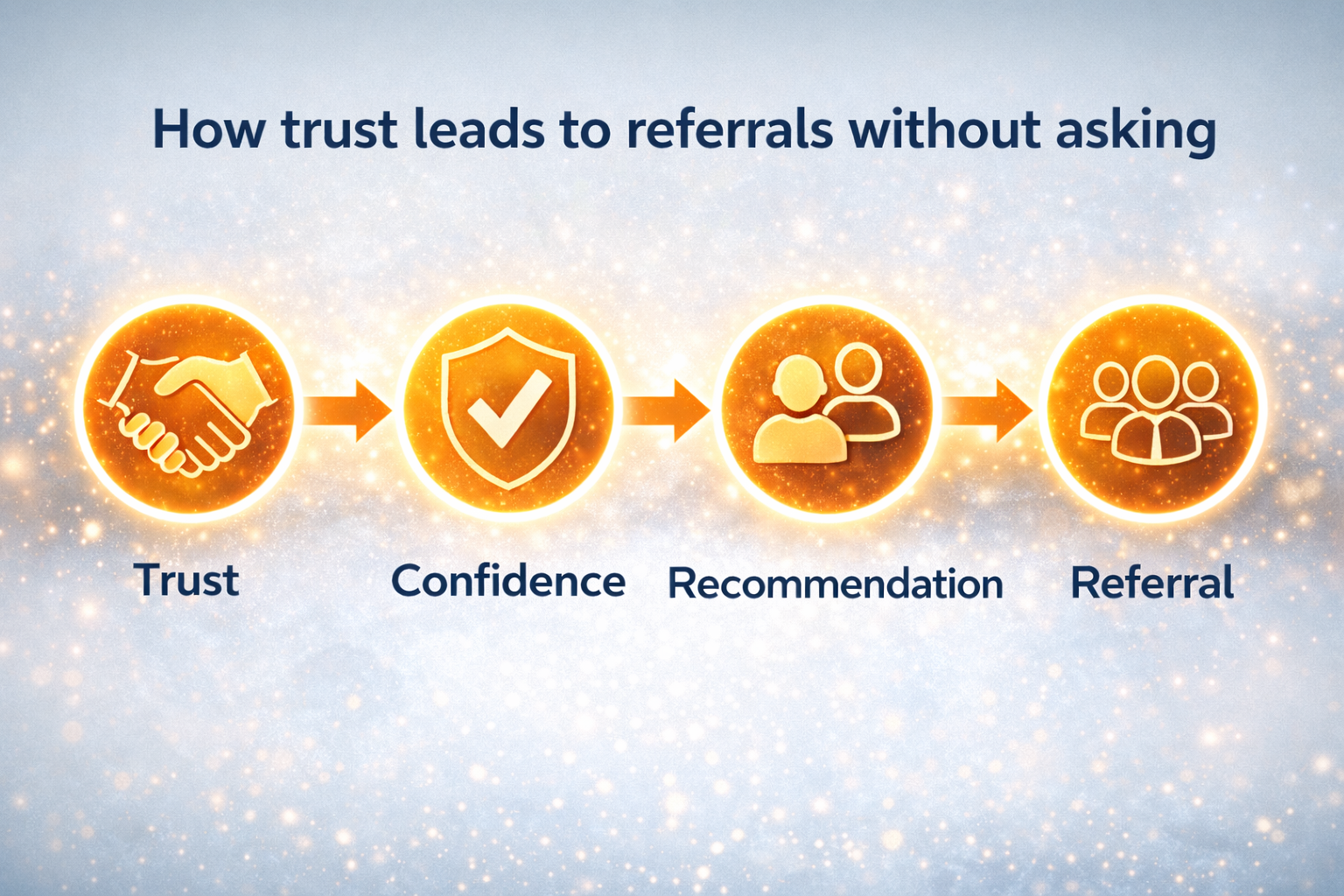
How to Get Referrals Without Asking
If you want to know how to get referrals without asking, the answer is simple.
Design your business to be easy to recommend.
This means removing the need for the referral conversation altogether.
You do this by:
1. Making outcomes clear
Clients should understand exactly what you do and who you help.
If they can’t explain it simply, they won’t refer you.
2. Reducing uncertainty
Clear communication removes hesitation.
When clients know what to expect, they feel safer recommending you.
3. Responding quickly
Speed builds trust.
Slow responses create doubt.
And doubt stops referrals.
4. Delivering consistently
Consistency creates predictability.
Predictability creates confidence.
Confidence creates referrals.
5. Making clients feel valued
People refer businesses that make them feel good.
Not just businesses that do good work.
Where Referrals Really Come From
Most businesses look for referrals in the wrong places, especially when they misunderstand their referral sources.
They chase new opportunities instead of recognising what they already have.
Your strongest referral sources are usually:
- existing clients
- past clients
- trusted relationships
These people already trust you.
They don’t need convincing.
They need clarity and confidence.
In many cases, businesses are sitting on untapped opportunities within their existing relationships.
They simply haven’t designed the experience to activate them.
The System Behind Natural Referrals
Referrals without asking are not accidental.
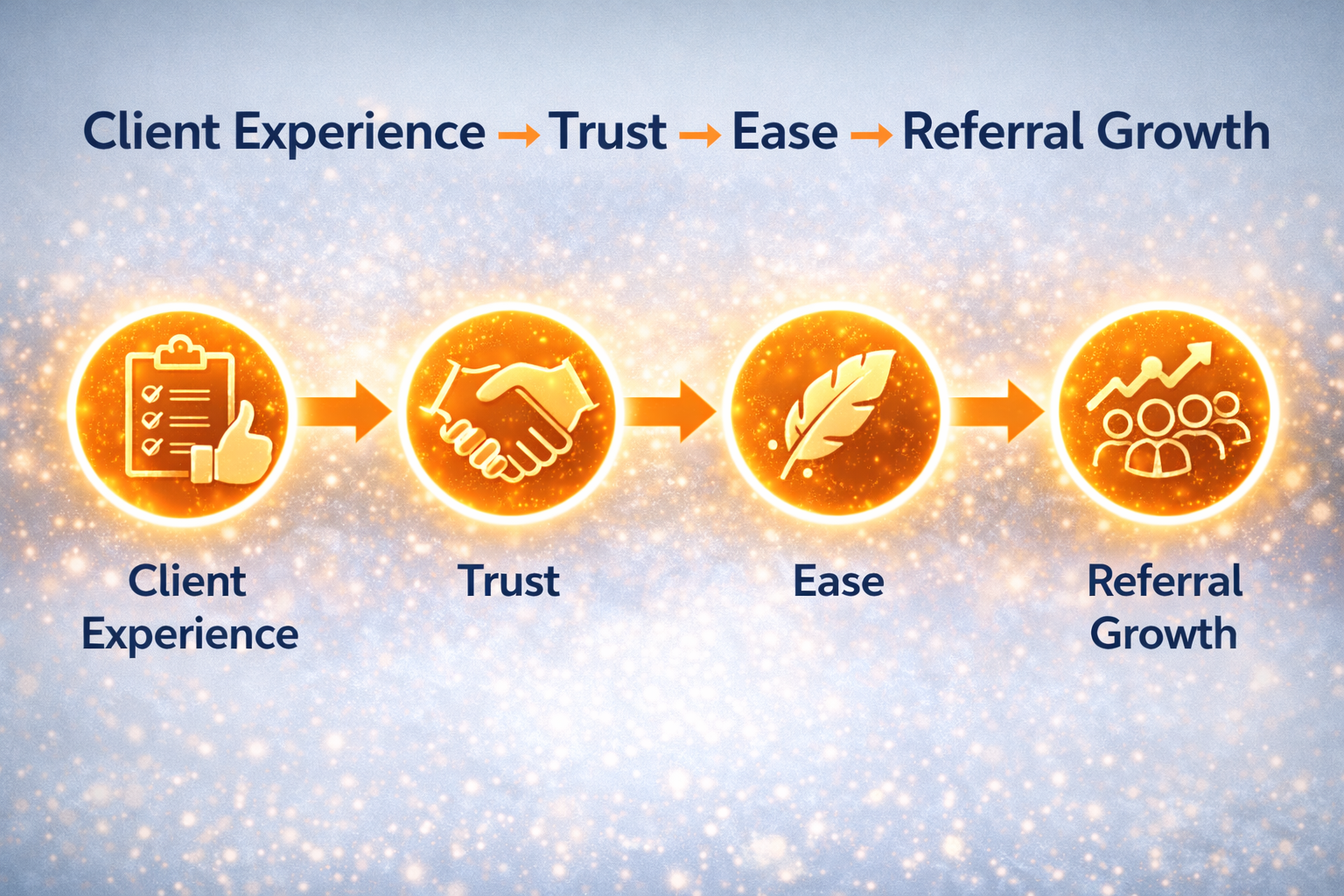
They are the result of a system.
A system where:
- the client experience builds trust
- communication removes friction
- interactions feel easy
- outcomes are clear
When this system is in place, referrals stop being something you chase.
They become something that happens.
Naturally.
Consistently.
Predictably.
This is the difference between referral marketing and referral growth.
One relies on effort.
The other relies on design.
FAQs:
Q: How can I get referrals without asking?
A: You can get referrals without asking by building trust, delivering a strong client experience, and making it easy for people to recommend you.
Q: Why don’t clients refer even if they are happy?
A: Clients may be satisfied but still feel uncertain about recommending you. Lack of clarity or confidence can stop referrals.
Q: Is asking for referrals a bad strategy?
A: Asking is not always wrong, but it can create pressure. Designing your business to earn referrals is more effective long term.
Final Thoughts:
Most businesses believe referrals come from asking.
In reality, they come from experience.
When the experience is clear, consistent, and confidence-building, referrals happen naturally.
Not because you asked.
But because it felt right for the person recommending you.
That is the shift.
From chasing referrals…
To becoming easy to recommend.
And once that shift is made, growth becomes far more predictable.
Speak soon.
P.S. A message for Service Business Owners
Your next clients are already sitting in your current client list.
You don’t need more ads, more networking, or more “hustle.” You just need a simple way to unlock the referral opportunities you already have.
That’s why you should take a look at this👉 The Referral Growth System

- Poor Communication in Construction: The Four People You Keep Misreading - June 13, 2026
- The Need For Human Connection in a Digital World - May 22, 2026
- How to Get Referrals Without Asking (No Awkward Ask) - April 11, 2026