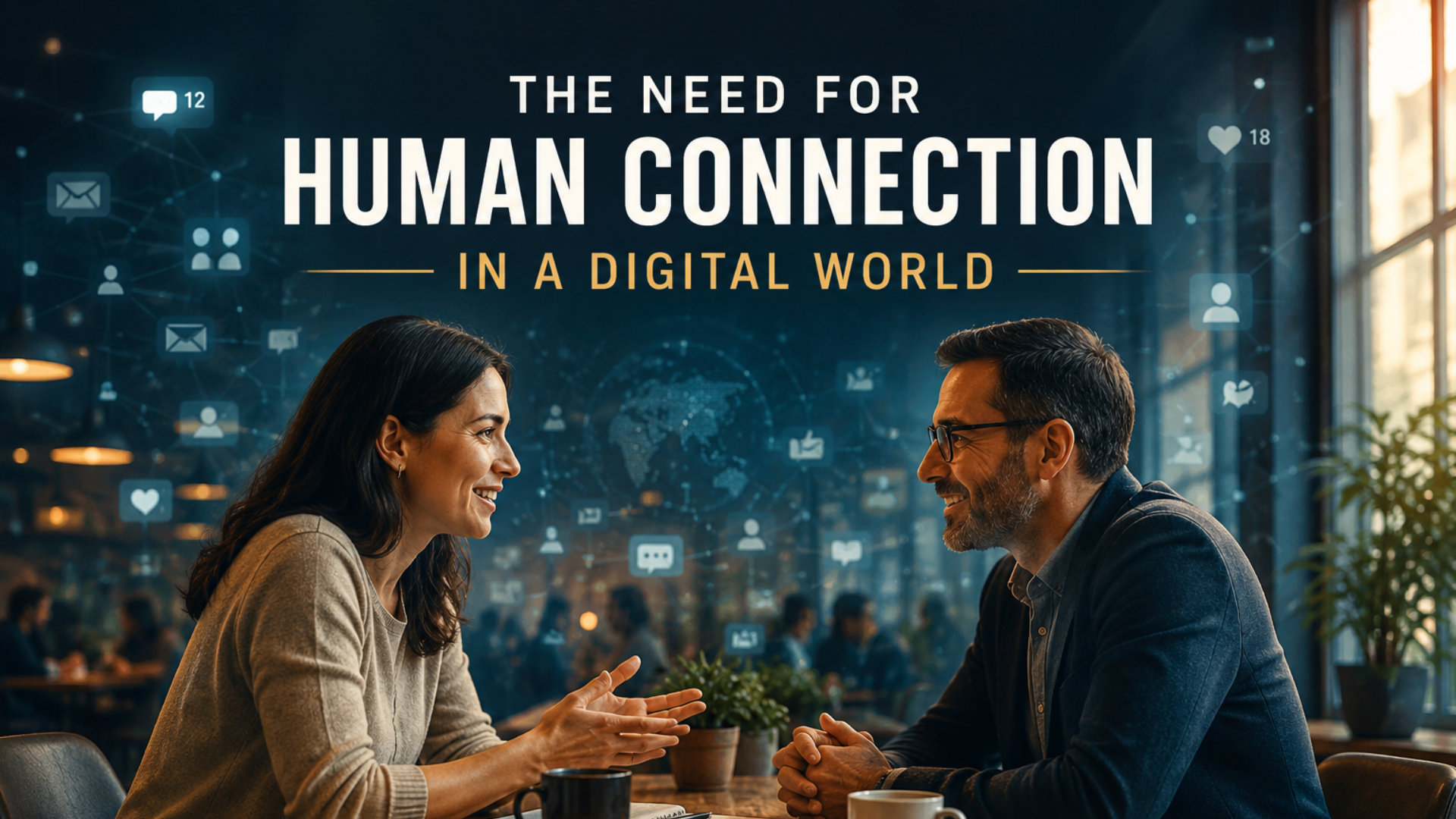
Why we need human connection
We live in the most connected world in history.
We can message anyone instantly. We can join meetings from anywhere. We can access information within seconds.
Yet many people feel more disconnected than ever.
That raises an important question:
Why is human connection so important in a digital world?
The answer matters because technology is changing how people live, work, and communicate. But while digital tools continue to evolve, one thing has not changed.
People still need people.
Key Takeaways
- Technology cannot replace genuine human trust
- Real conversations build stronger relationships
- Human connection improves mental well-being
- Trust grows through empathy and presence
- Businesses win when relationships feel human
Why human connection matters more than ever
Human connection is one of the foundations of emotional well-being.
Strong relationships help people feel understood, valued, and supported. They reduce loneliness and create a sense of belonging.
Without connection, life can feel empty, even when people are surrounded by technology.
This is becoming a growing problem in modern life.
Many interactions now happen through screens rather than conversations. Messages replace meetings. Notifications replace meaningful discussions.
Communication has become faster, but often less personal.
The problem with digital overload
Technology has created incredible opportunities. It allows businesses to work globally and families to stay connected across long distances.
But digital convenience also creates challenges.
People are constantly interrupted by alerts, emails, and social media updates. Attention is pulled in multiple directions at once.
As a result, many conversations become shallow.
Someone may physically sit in front of you while mentally checking messages or scrolling social feeds. Over time, this weakens connection and trust.
Digital overload can also create emotional exhaustion.
People compare themselves online. They feel pressure to appear successful or constantly available. Many end up feeling isolated despite being connected all day.

Why is human connection so important?
Human connection matters because people are emotional beings, not machines.
Relationships provide support during difficult times. They create joy, trust, reassurance, and meaning.
Research consistently shows that people with strong social relationships often experience:
- Better mental health
- Lower stress levels
- Greater happiness
- Increased resilience
- Improved physical health
Connection also shapes confidence.
When people feel heard and understood, they feel safer. That emotional safety affects how they communicate, collaborate, and build relationships.
This applies in business as much as personal life.
People rarely choose businesses based on logic alone. They choose people they trust.
How technology affects relationships
Technology is not the enemy.
The real issue is how it is used.
Digital communication can strengthen relationships when used thoughtfully. Video calls, voice notes, and online communities can help people stay connected.
For many families and businesses, these tools are essential.
Problems appear when technology replaces meaningful interaction rather than supporting it.
Text messages lack body language and tone. Emails can be misunderstood. Social media often encourages performance instead of authenticity.
This can lead to confusion, conflict, and emotional distance.
People begin communicating more, while connecting less.
The role of empathy in communication
Empathy is one of the most important parts of human connection.
It allows people to understand how others feel. It helps conversations feel safe, respectful, and meaningful.
In digital communication, empathy matters even more.
Without facial expressions or tone of voice, messages can feel cold or unclear. A thoughtful response can completely change how someone experiences an interaction.
Simple actions make a difference.
Listening carefully.
Responding with patience.
Showing appreciation.
Being fully present.
These small behaviours build trust over time.
Empathy is also one of the few things technology cannot fully replace.
Artificial intelligence can provide information. It can automate tasks. But genuine emotional understanding still belongs to humans.
That is why the human touch matters more than ever.
Why face-to-face interaction still matters
Face-to-face communication creates a different kind of connection.
People can read body language, facial expressions, and tone. They can sense energy, emotion, and sincerity.
This helps relationships develop faster and more naturally.
In-person conversations also reduce misunderstanding.
A smile, pause, or reassuring tone often communicates more than words alone.
This is why strong businesses still value real conversations, meetings, and personal interaction.
Technology can support relationships, but it cannot completely replace human presence.

How businesses benefit from human connection
Businesses often focus heavily on systems, automation, and efficiency.
Those things matter.
But businesses grow faster when relationships feel human.
People remember how they were treated. They remember how conversations made them feel.
This is especially important in professional services.
Clients want clarity, trust, responsiveness, and reassurance. They want to feel understood, not processed.
Businesses that create genuine relationships often experience:
- Stronger customer loyalty
- More repeat business
- Better referrals
- Higher trust levels
- Long-term growth
In many ways, human connection becomes a competitive advantage.
As technology becomes more common, human interaction becomes more valuable.
Balancing digital and real-world relationships
Technology should support relationships, not dominate them.
Finding balance matters.
That may mean setting boundaries around screen time. It may mean protecting time for uninterrupted conversations.
Simple habits can strengthen relationships significantly.
Put the phone away during meals. Focus fully during conversations. Schedule face-to-face meetings where possible.
Small actions often create the strongest emotional impact.
Quality matters more than quantity.
A meaningful conversation can create more connection than hundreds of online interactions.
The future of connection in an AI world
Artificial intelligence will continue changing how people work and communicate.
Automation will increase. Digital tools will become more powerful. Efficiency will improve.
But human connection will become even more valuable.
In a world filled with automation, empathy stands out.
Trust stands out.
Presence stands out.
Authenticity stands out.
People will increasingly choose businesses, leaders, and relationships that feel human.
Technology may shape the future, but relationships will still shape decisions.
That is why human connection remains essential in a digital world.
FAQs:
Q: What is human connection?
A: Human connection is the emotional bond people create through trust, communication, empathy, and shared experiences.
Q: Why is human connection important in business?
A: Human connection builds trust, loyalty, referrals, and long-term relationships with customers and clients.
Q: Can technology replace human connection?
A: Technology can support communication, but it cannot fully replace empathy, emotional understanding, and real human presence.
Final Thoughts:
Technology will continue evolving.
But people will still need trust, empathy, and meaningful relationships.
The businesses and individuals who succeed in the future will not simply communicate more. They will connect better.
That human touch may become the most valuable advantage of all.
Speak soon.
P.S. A message for Service Business Owners
Your next clients are already sitting in your current client list.
You don’t need more ads, more networking, or more “hustle.” You just need a simple way to unlock the referral opportunities you already have.
That’s why you should take a look at this👉 The Referral Growth System

- Why Site Teams Don’t Speak Up (And How to Fix It) - August 26, 2026
- Reducing Site Errors Through Better Briefings: A Practical Guide - August 14, 2026
- Communication Intelligence in Construction: A Proven Way to Cut Rework Costs - August 7, 2026