
Communication intelligence is the ability to read people and adjust your message before you speak. In building work, it is not just a soft skill. It is a vital tool for profit and safety.
The technical work across our industry is often top class. But when messages fail, site plans fall apart. You can explore more guides on our construction communication blog to help your teams avoid these errors.
When project managers and site teams lack a shared framework, costs soar. Mistakes force teams to rebuild work that was already finished.
Key Takeaways
- Financial Risk: Poor site talks cost construction billions yearly.
- 4 Step Process: Observe, understand, adapt, and deliver clear messages.
- DACE Framework: Match your style to four main personalities.
- Better Choices: Good communication leads to fast, correct action.
The True Cost of Poor Site Talks
Bad talks cost the UK construction industry up to £13 billion every year. This cost comes from simple misunderstandings, bad handovers, and wrong assumptions. You can review UK construction survey data to see how rework impacts site margins across the country.
A single bad message can waste up to 1,500 man hours on one project. Up to 15% of project value gets lost in worst case settings.
Poor communication in construction is not just an office annoyance. It causes missed deadlines, tired workers, and lost profit.
When an architect updates a drawing, that change must land clearly with site trades. If details get lost, workers build to old plans.
How Messages Fade from Office to Site
Most managers think sending an email or giving an order is enough. In real life, every person hears things through their own filter.
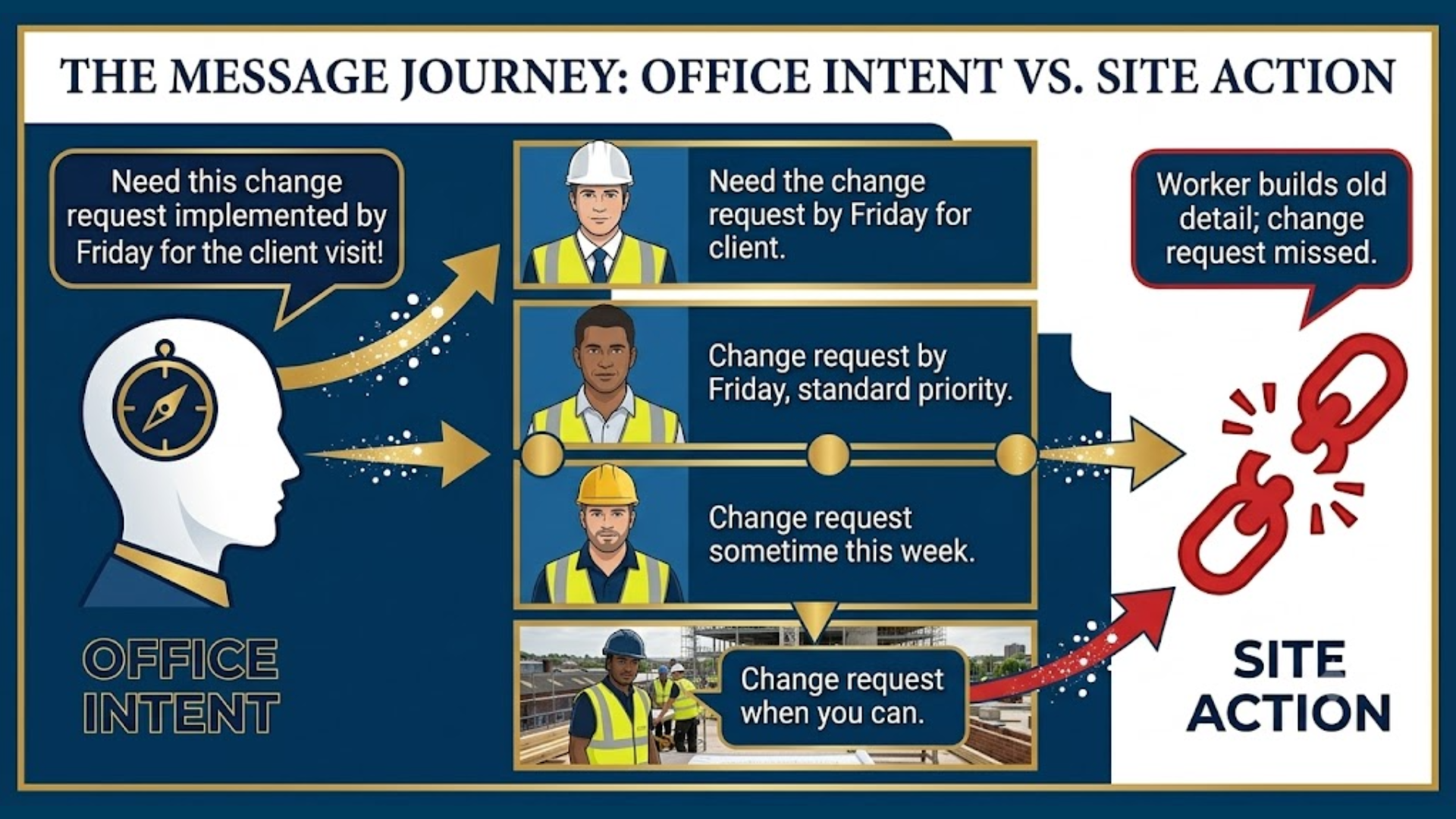
Personal history, site stress, and time pressure change how a message is received. A manager might ask for a job by Friday to prepare for a client visit.
As that order passes through three people, the true meaning fades. The final worker only hears that the task is somewhat urgent.

This loss of meaning leads directly to site errors. Communication intelligence stops this loss before it costs you money.
The Four Steps of Communication Intelligence
To communicate with confidence, you must follow a clear four step process. The Communication Compass uses these steps to guide every site conversation.
- Observe: Collect clues before you speak. Notice tone, body cues, and site pressure.
- Understand: Use open questions to find true concerns. Do not just confirm what you think you know.
- Adapt: Dial your delivery to match the listener. Change your detail level and tone.
- Deliver: Create total clarity so people act with confidence.
Good communication starts long before you open your mouth. Discovering what people need to hear is the real key to success.
Building Trust Across the Supply Chain
Clear communication builds long term business strength. When projects finish on time without rework, client trust grows fast.
Happy clients and solid trade partners help you grow your business through referrals and repeat work. Clear site talks protect your margins and your brand standing.
When teams trust each other, they speak up about problems early. Early talks keep small site errors from turning into costly claims.
FAQs:
Q: What is communication intelligence in construction?
A: It is a four step method to observe, understand, adapt, and deliver messages that prevent site errors.
Q: Why is poor communication in construction so expensive?
A: It causes bad task handovers and wrong drawing interpretations that lead to rework and lost hours.
Q: How does the DACE model help site managers?
A: It helps managers spot four main personality types on site so they can tailor daily briefings.
Final Thoughts:
Technical know-how will always be vital in the building sector. But technical skill alone cannot stop costly site miscommunication. By using communication intelligence, you can match your message to your team, stop rework, and protect your project profits. Clearer conversations lead directly to better decisions and far better site outcomes.
Speak soon.
P.S. If you’d like to find out how improving confidence, communication and decision making can benefit your business. Solve that problem here.

- Why Site Teams Don’t Speak Up (And How to Fix It) - August 26, 2026
- Reducing Site Errors Through Better Briefings: A Practical Guide - August 14, 2026
- Communication Intelligence in Construction: A Proven Way to Cut Rework Costs - August 7, 2026