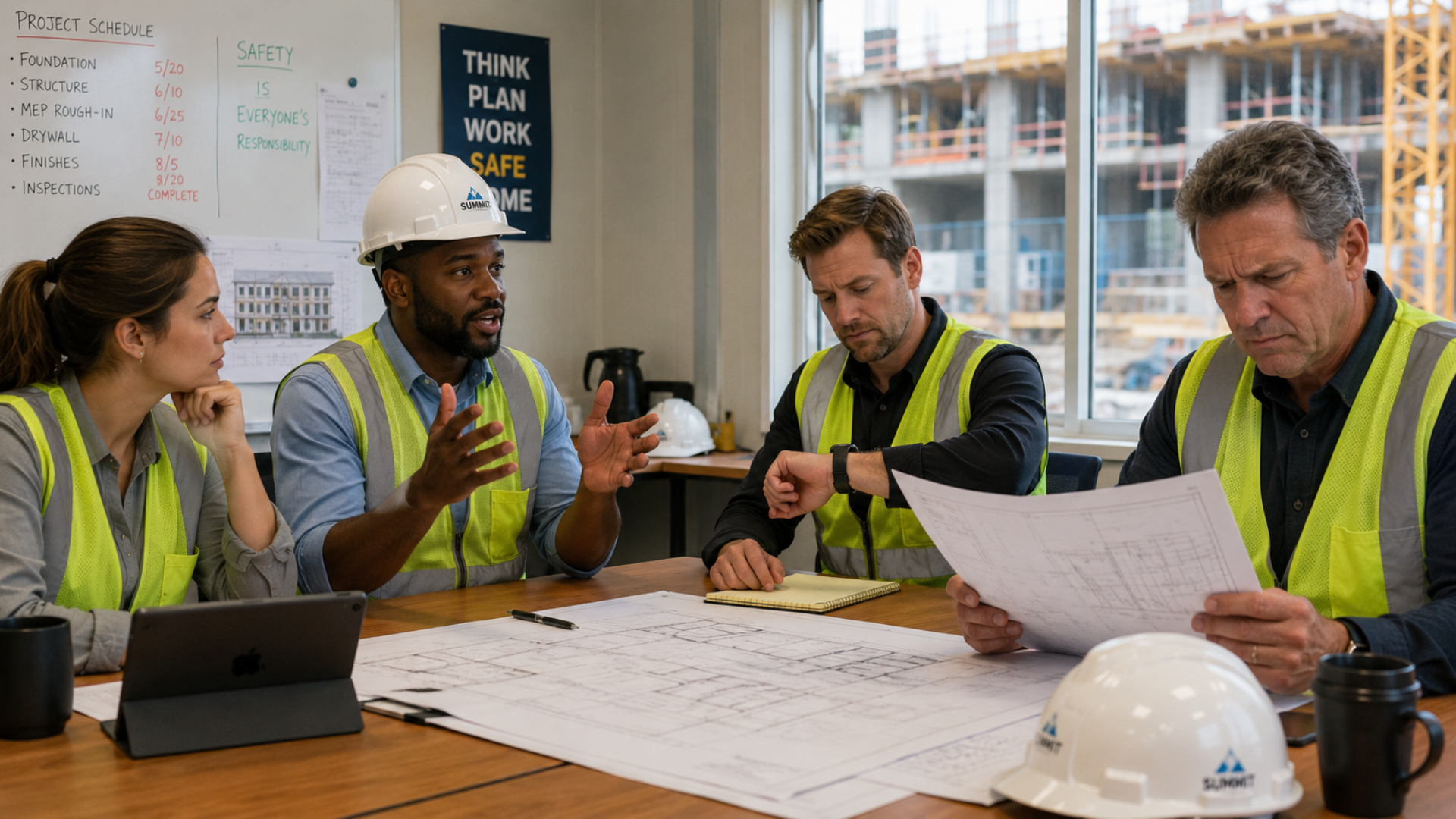
Poor communication in construction doesn’t look like much when it happens. A point nobody raised. A question nobody asked. A worry someone kept to themselves. It costs nothing today. It costs a fortune later.
I spent forty years in this industry. I started on the tools as a joiner. I graduated to tendering, planning and delivering multi million pound projects. And the most expensive mistakes I saw were rarely technical. They were conversations that didn’t happen.
That’s a hard thing to measure. So we don’t. We track cost, programme, quality and safety. But the thing driving all four — how well people talk to each other — barely gets a mention.
Key Takeaways
- The costliest mistakes start as missed conversations
- Reading people fast is a learnable skill
- Four types: Driver, Analyst, Connector, Explorer
- Misreading a person costs as much as missing a detail
- Read first, then communicate and decide
Why does poor communication in construction cost so much?
Because the cost lands late. And it lands looking like something else.
A £5k problem becomes a £50k problem this way. Someone spots a problem. They mention it to the wrong person, in the wrong way. It doesn’t land. The moment passes.
Then there’s the person who spots what they think is a problem and doesn’t have the confidence to make it known (if I’m wrong I’ll never live it down) or the “it’s not my job” attitude.
Months later it’s a delay, a variation, or a dispute. The information was there all along. The conversation just didn’t work. That is poor communication in construction in a nutshell.
You read details fast — why not people?
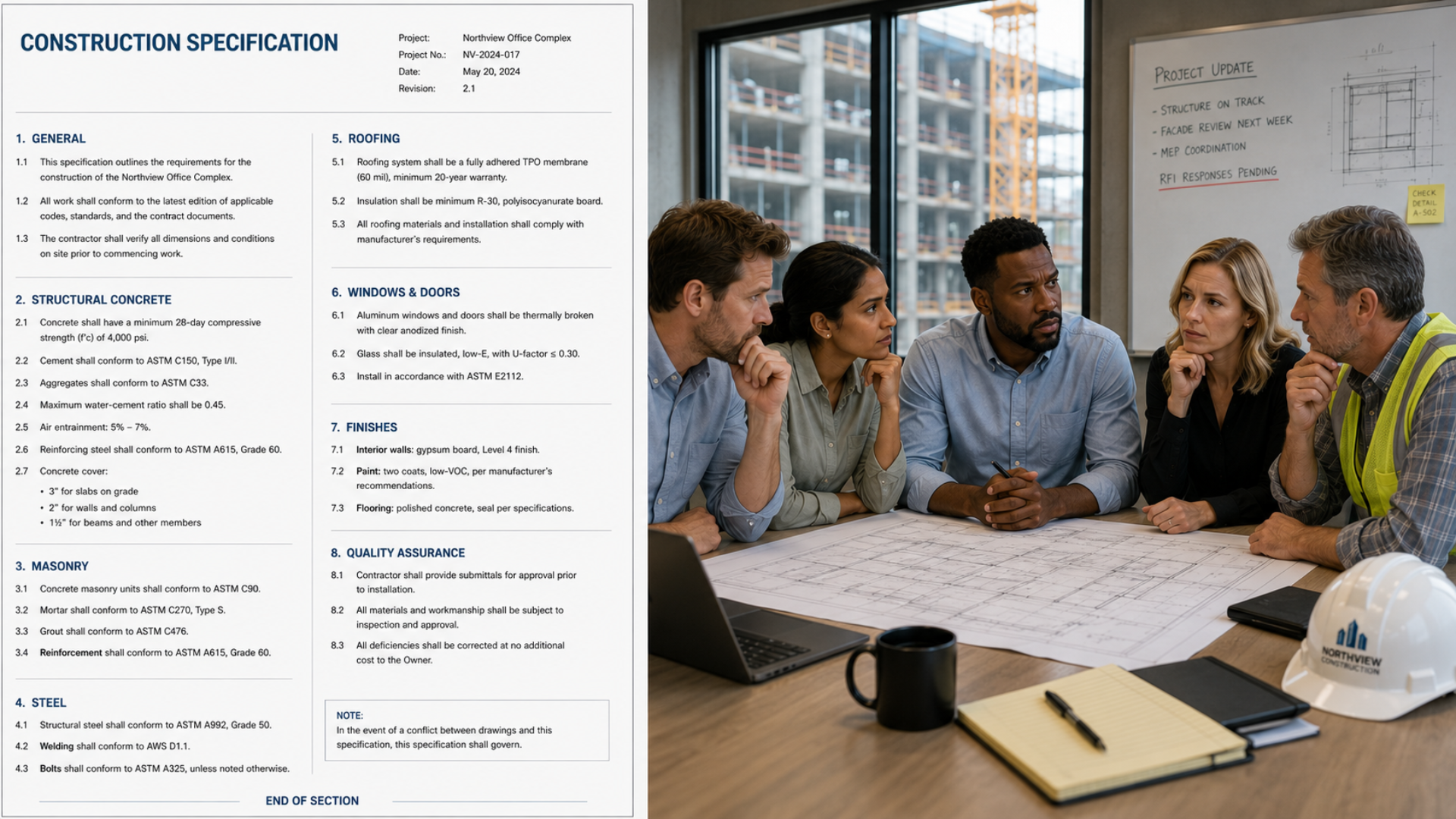
Hand an experienced engineer or site manager a drawing. They’ll spot the problem almost before they sit down. Hand an experienced QS a tender or a Bill of Quantities. They’ll find the risks in minutes.
Now, someone always says that’s how mistakes happen. Read too fast and you miss things and in a lot of jobs, fair enough.
But look at who does that reading. It’s never a novice. A novice only gets a “tell me what you think” test. The people reading it for a real decision are experienced. And they are accountable.
Miss an issue that hits cost or margin, and your judgement gets questioned hard. So the speed isn’t careless. It’s experience. Twenty years or so in a single glance.
Here’s the odd part. We build that experience for reading. Drawings, specs, contracts. But the speed rarely crosses over to people.
We’ll read a document fast and well. Then we misread the room just as fast. And no one questions our judgement on that. Even though misreading a person costs every bit as much (if not more). It just shows up later, wearing a different name.
The four people on every project
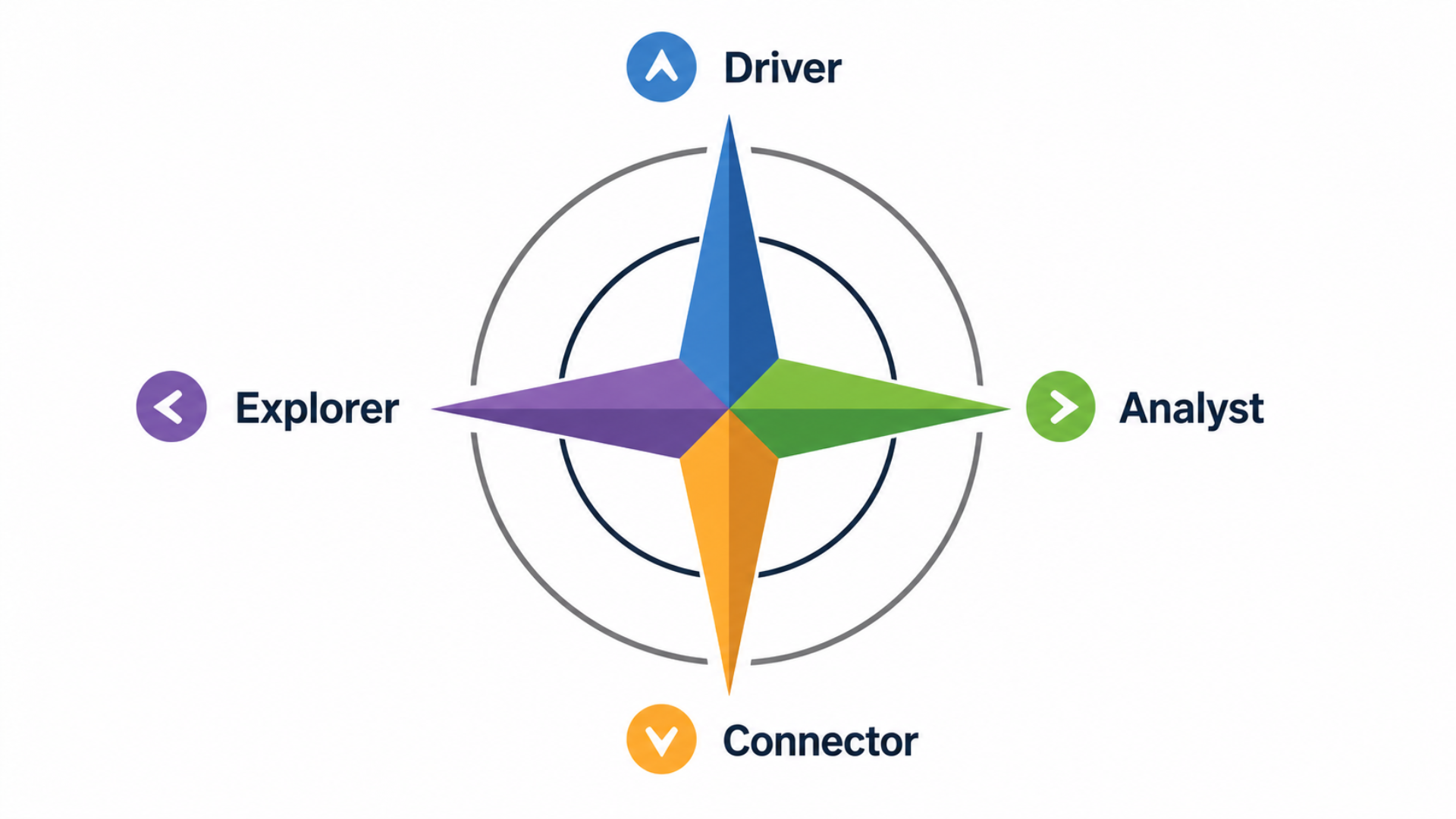
So over the years I built a simple way to read people fast. Four types. I call them the four points of The Communication Compass.
And before you ask: yes, this is the same family as DISC, Insights or Myers-Briggs. I didn’t invent the idea that people come in types. I just made it quick enough to use in the room, in the moment.
The Driver
The Driver wants the bottom line. Give me the numbers. Give me the decision. Move on. Talk in outcomes and they’re with you. Bury the point in detail first, and you’ve lost them.
The Analyst
The Analyst wants to know how you got there. What’s the order? What’s the risk? What did we check? They aren’t being difficult. They’re the one who spots what others miss. Don’t rush them or they may go quiet — and the detail could go quiet with them.
The Connector
The Connector wants to know the team is alright with it. They read the room for who’s on board. They won’t back a plan they think will split the people doing the work, have the wrong person in the wrong place. Push too hard and you get a nod that looks like acceptance but it’s just resignation.
The Explorer
The Explorer wants to know what else you could do. They bring the ideas and the options. Priceless early on. Maddening to a Driver who’s already decided. Shut them down too soon and you lose a better answer you never heard.
None of these is the right one to be. You need all four on a job. And most people are a blend — one lead type, with a bit or bits of another.
The skill isn’t sorting people into boxes. It’s reading which one is in front of you, and adjusting before the conversation goes wrong.
Reading them is only half the job
Spotting the type is the read. What you do next is the win. And it comes down to three things.
You communicate to them. Give the Driver the bottom line. Then give the Analyst the how. One update that works for both, instead of one that loses one of them.
You decide with them. You know the Connector needs the team brought along. You know the Explorer needs to feel heard before they’ll commit.
And you find the confidence to say the hard thing well. Because you know how this person takes bad news. You’re not guessing.
Confidence. Communication. Decision. That’s the gap between knowing something is wrong and getting it said, heard and fixed — while it’s still a £5k problem.
Where the cost of poor communication in construction really hides
Picture two of your best people in one meeting. One wants the bottom line. One wants to know how you got there. Both are right.
Left unread, the Driver pushes on. The Analyst goes quiet. The one detail that mattered never reaches the table. Nobody did anything wrong. The conversation just didn’t work.
That’s the real price. Not the awkward moment in the room. It’s the decision made on half the facts — because the other half sat with someone you misread.
The good news? This is a skill you can learn, not something you’re born with. You can learn to read the four types. And you can build it across a team, so the whole job gets better at the talks that quietly decide how it goes.
FAQs:
Q: What causes poor communication in construction?
A: Most of it comes down to misreading people, not missing facts. Two people read the same situation in different ways. The message gets sent, but it doesn’t land. The result turns up later as rework, delay or a dispute.
Q: How do you improve communication on a construction project?
A: Start by reading the person in front of you. Work out what they need — the bottom line, the detail, the team’s view, or the options. Then shape your message to suit them. It’s a small change that makes a big difference.
Q: Can communication skills be taught to construction teams?
A: Yes. Reading people is a skill, not a fixed trait. With a simple model and a bit of practice, a whole team can get better at it — and at the costly conversations that decide how a job runs.
Final Thoughts:
Poor communication in construction is rarely about technical details. It’s about people, and how well we read them. Learn to spot the four types. Then communicate, decide, and speak up with confidence.
That’s how a problem is identified and dealt with early so that it doesn’t quietly escalate into something much bigger later.
Speak soon.
P.S. If you’d like to find out how improving confidence, communication and decision making can benefit your business. Solve that problem here.

- Why Site Teams Don’t Speak Up (And How to Fix It) - August 26, 2026
- Reducing Site Errors Through Better Briefings: A Practical Guide - August 14, 2026
- Communication Intelligence in Construction: A Proven Way to Cut Rework Costs - August 7, 2026